


Top-Spray Electric Kettles or Steam Filter Teapots.
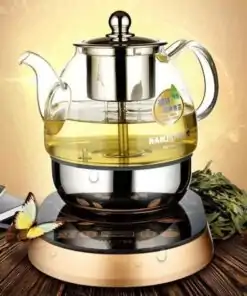
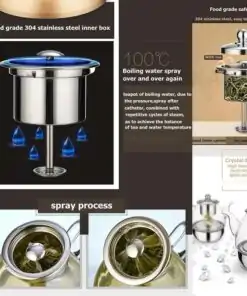
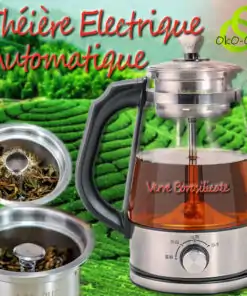
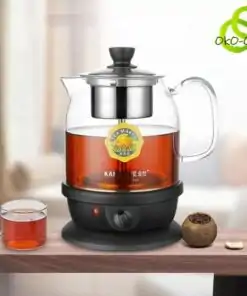
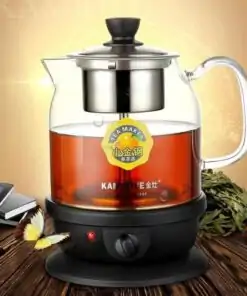
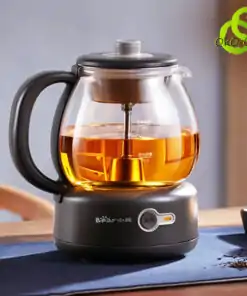
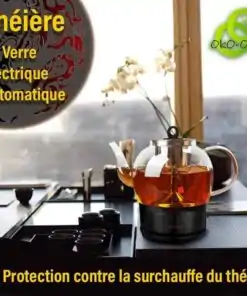
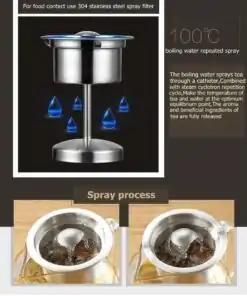
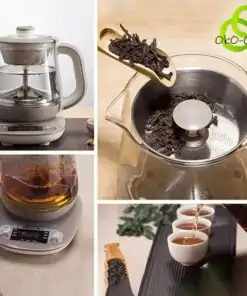
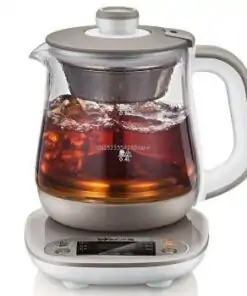
Most electric kettles use a steam tea filter. The top-spray kettle works on a simple and effective principle. The spray tube draws water from the bottom of the kettle. Then, steam pushes the water up through the pipe. When the water and steam reach the top tea filter, the temperature stabilizes around 99 degrees. The tea leaves or infusion are wetted from above. The tea does not soak in water and is protected from boiling. This is one of the best ways to preserve your infusion’s aromas and ensures you always brew perfect tea.
Read more
What Are the Benefits of Electric Kettles?
The latest electric kettles also feature electronic thermostats and some are programmable. This technology ensures consistent concentration levels and preparation quality.
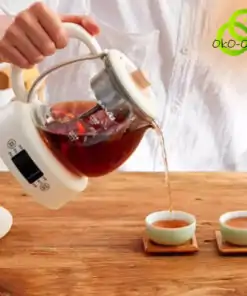
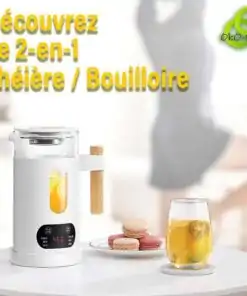
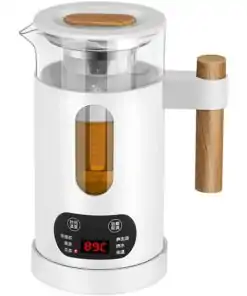
With an automatic kettle, you can adjust tea watering according to temperature and infusion time. A keep-warm function is available to maintain the ideal tasting temperature.
Recently, affordable and efficient models have become widely available.
Everything You Need to Know About New Electric Kettle Models.
Among electric kettle types, there are mainly 3 categories:
Water boilers, simply for hot water.
Kettles with a tea infuser, with or without a thermometer and temperature control.
The latest generation of top-spray kettles, which are automatic and feature temperature regulation.
How Does an Electric Kettle Work?
To heat water, nothing beats an immersed heating element. Though simple, it remains highly effective. We recommend models with hidden elements (built into the base). Older kettles with exposed elements inside the vessel are harder to clean and can affect water taste. New models are easier to clean and odorless. Recently, induction models have appeared, offering faster heating times.
How to Choose the Right Electric Kettle?
It depends on your usage and your favorite tea’s characteristics. Each tea has its own preparation method and everyone has their habits. Below, we provide plenty of information to help you decide.
Kettles without infusers. Sometimes people think they need multiple tools to brew tea. But tea is just hot water and leaves. A simple kettle and a strainer can do the job.
Though you can infuse tea directly in the kettle, it’s usually better to brew outside in a separate teapot or container like a Chawan.
For materials, glass is our top choice due to its neutral taste. High-quality stainless steel is also suitable. Avoid painted, coated steel or plastic models as many pose health risks.
Kettles with Built-in Tea Infuser and Diffuser.
These models are designed specifically for teas, infusions, and decoctions. The latest versions feature precise electronic thermostats to monitor exact water temperature. Infusion happens by steeping inside the kettle. Once the desired strength is reached, you remove the diffuser. These “smart kettles” also keep your tea at the perfect serving temperature.
Temperature Chart.
Below is a temperature guide for brewing tea. It’s not exhaustive but gives you a useful reference for best practices.
Preparation Methods
Preparation varies between black, red, yellow, and green teas.
Generally, fermented teas are rinsed in a fine strainer with the hottest water possible. Then, leaves steep in water between 85 and 90 °C.
Green teas are brewed directly without rinsing, at 70 to 80 °C.
Reminder: Green tea: no fermentation, Oolong tea: partial fermentation, Black tea: full fermentation, and Pu erh tea, pronounced “Poo-air”: post-fermented.
Adjust all methods to your taste. The priority is to brew tea with the concentration you prefer.
Purists will follow traditional tea ceremony rules, which vary by region and country.
Comparing the Matcha “Chanoyu” ceremony (Japan = respect) to the Pu erh “Gongfu Cha” ceremony (China = social ritual), shows how philosophy and practice differ greatly.
Summary of Automatic Kettles.
These kettles are inspired by traditional Italian coffee makers. Their key advantage is that tea leaves never soak directly in water.
Automatic kettles also protect tea leaves from boiling.
For gravity-based watering, the water must remain liquid, so the temperature stays below boiling point.
Thus, tea leaves are never exposed to temperatures above 100 °C.
You can find a wealth of information by clicking on our blog.
Electric Teapot
$167,89
Sale!
Electric Teapot
Original price was: $85,93.$69,35Current price is: $69,35.
Electric Teapot
$112,89
Electric Teapot
$92,05
Electric Teapot
$103,63
Electric Teapot
$74,68
Out of stock
Die Welt des Tees
$172,52
$23,04