







Loose leaf tea, tea balls and tea bags.
Blooming teas that open in the cup, green, oolong, black, white or pu-erh tea, as leaves, pearls, cakes or powder, you will find a tea for every moment here.
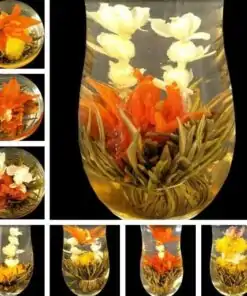
Blooming teas that open in water.
A blooming tea is a ball of green tea leaves tied by hand around dried flowers. Dropped into hot water, it slowly unfolds and reveals the flower hidden at its heart.
It is one of our specialities and a favourite with our customers. To enjoy the show, serve it in a glass teapot. It also makes a lovely gift for a tea lover.
Camellia sinensis, the plant behind every tea.
Green, oolong, black, white, yellow or pu-erh, all these teas come from the same shrub, Camellia sinensis. What sets them apart is how the leaf is processed after picking, above all its oxidation in contact with air.
Around 1848, the Scottish botanist Robert Fortune travelled through China in local dress to learn the secrets of tea. He brought thousands of plants back to the Indian Himalayas, where the Darjeeling gardens were born.
To learn more, read our article Everything you need to know about tea.
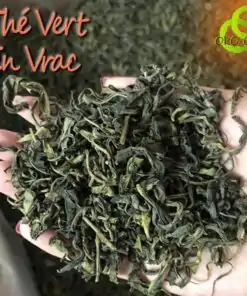
Green tea, fresh and grassy.
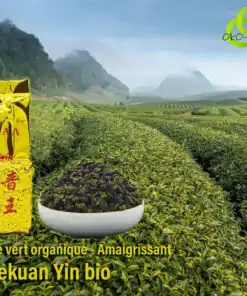
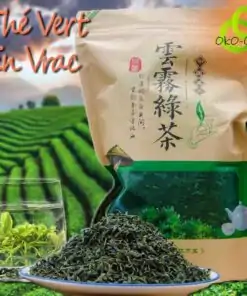
Green tea is heated right after picking to stop oxidation. It keeps its colour and its notes of fresh grass, hazelnut or green vegetables.
Brew it between 70 and 80 °C, never with boiling water, for 2 to 3 minutes. Water that is too hot makes it bitter. We offer it loose, in several formats.
Oolong tea, rolled into small pearls.
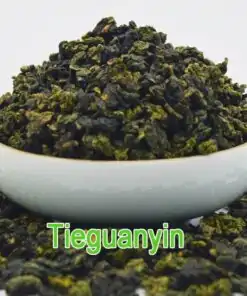
Oolong is a semi-oxidised tea, halfway between green and black. Its leaves are rolled by hand into small pearls that slowly unfurl in the teapot.
Ours comes from Anxi, in Fujian. It can be steeped several times, each infusion a little different from the last. Allow 90 to 95 °C and 1 to 3 minutes.
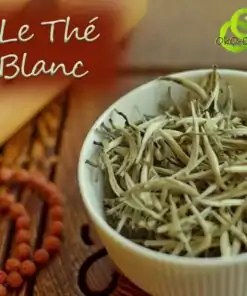
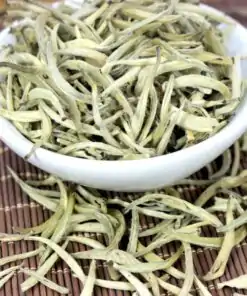
White tea, the most delicate.
White tea brings together buds and young leaves that are simply withered and then dried. It is the least processed tea, with a soft, floral and slightly honeyed taste.
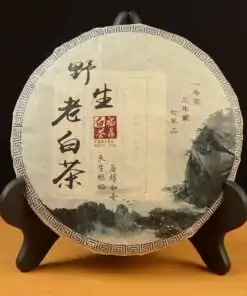
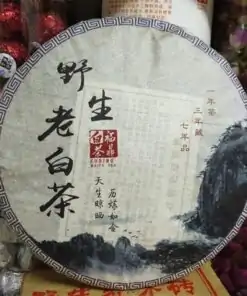
It comes from Fujian province. You will find it loose or pressed into a cake, easy to store and to break off as you like.
Black tea, bold and comforting.
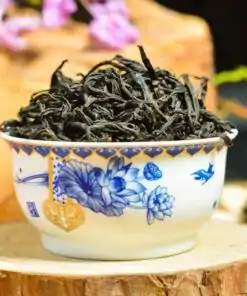
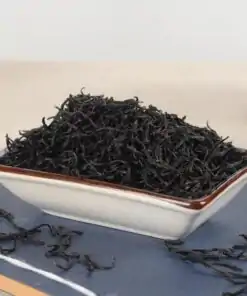
Black tea is fully oxidised, hence its dark colour and rounded taste. In China it is actually called “red tea”, after the colour of the cup.
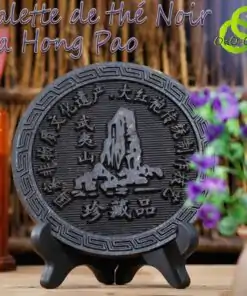
Among our black teas, Lapsang Souchong is dried over a pinewood fire, which gives it its famous smoky aroma. It is a great choice for breakfast.
Yellow tea, a Chinese rarity.
Yellow tea resembles green tea, with one extra step. Its leaves are wrapped for a few hours so they gently turn yellow, which softens their taste.
The result is a cup that is less grassy than a green tea, round and subtle. It is one of the rarest teas in China, and a fine discovery for the curious.
Pu-erh, a tea that improves with age.
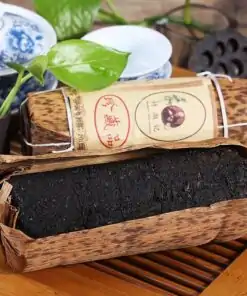
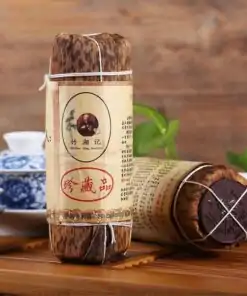
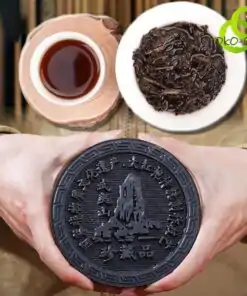
Pu-erh comes from Yunnan. Its leaves are fermented, then pressed into cakes or bricks. Like some wines, it becomes smoother as it ages.
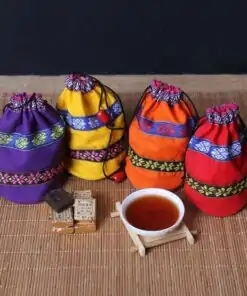
Our small bricks need no scales, one per teapot. Rinse them first for a few seconds in very hot water, then steep for 2 to 4 minutes.
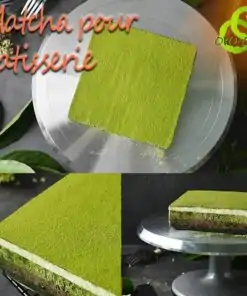
Matcha, to whisk or to bake with.
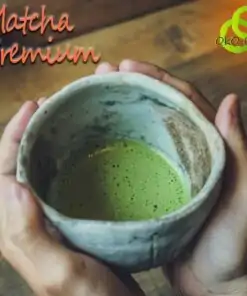
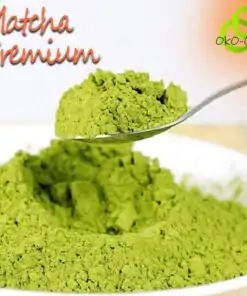
Matcha is a powder made from whole green tea leaves. It is not steeped but whisked in a little hot water until a fine froth forms.
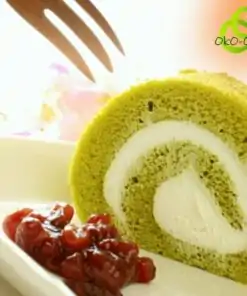
Choose organic matcha for drinking, in a cup or as a latte, and baking matcha to colour and flavour your desserts.
It works everywhere in the kitchen, from truffles to ice cream, as well as brownies, cookies and custards.
Loose leaf tea, for tea lovers.
Loose leaf tea lets the leaves unfold freely in the water. They release their full aroma, far better than a powder sealed in a bag.
Allow 2 to 3 grams per cup of 200 ml, about one heaped teaspoon. An infuser or a teapot with a filter is all you need.
Assortments to explore.
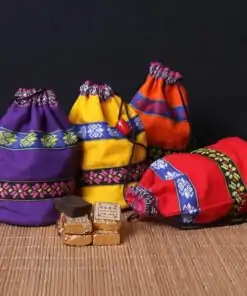
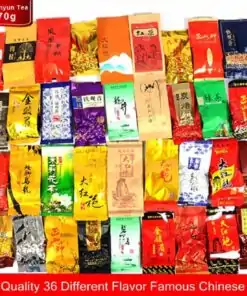
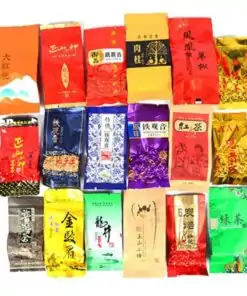
Can’t decide between several teas? Our tea bag assortments and pu-erh sets let you taste several varieties before choosing your favourite.
They make a lovely gift for a birthday or a celebration, and go perfectly with a new teapot.
Brewing temperatures and times.
Every tea has its ideal temperature. Here are our guidelines for a perfect cup.
| Tea | Temperature | Brewing time |
|---|---|---|
| Blooming tea | 80 to 85 °C | 3 to 5 min, until it opens |
| Green tea | 70 to 80 °C | 2 to 3 min |
| Oolong | 90 to 95 °C | 1 to 3 min, several infusions |
| White tea | 75 to 85 °C | 3 to 5 min |
| Yellow tea | 75 to 80 °C | 2 to 3 min |
| Black tea | 90 to 95 °C | 3 to 5 min |
| Pu-erh | 95 to 100 °C | quick rinse, then 2 to 4 min |
| Matcha | 70 to 80 °C | whisked for 20 to 30 seconds |
A temperature control kettle takes the guesswork out of it.
Storing your tea.
Tea dislikes light, moisture and odours. Keep it in an airtight, opaque tin, away from spices and coffee.
Stored well, a green tea stays fresh for several months. Pu-erh cakes, on the other hand, can be kept for years.
Good to know.
Tea contains theine, the same molecule as the caffeine in coffee. Pregnant or breastfeeding women, children and people whose sleep is easily disturbed should limit how much they drink. If you sleep badly, avoid it in the late afternoon and choose a herbal tea, which is naturally theine-free.

Teas
Teas
Teas
Teas
Teas
Teas