


Buddhist meditation and rituals.
Bronze and brass pieces to support your practice, from singing bowls to altar statues and prayer wheels.
Buddhist practice, day by day.
Buddhist practice rests on simple gestures, repeated every day. Sitting down, breathing, reciting a mantra, lighting a lamp, filling the offering bowls.
Ritual objects give these gestures a frame. The sound of the cymbals opens the session, the flame of a lamp marks the moment you sit down.
The Tibetan singing bowl, meditating with sound.
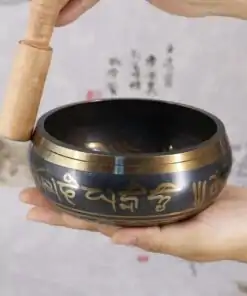
A Tibetan singing bowl is struck or rubbed around its rim with a mallet. It gives a long sound that carries on well after the gesture.
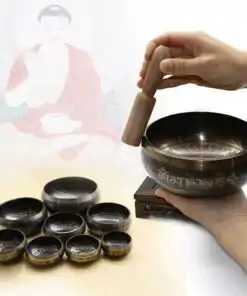
Our bowls are made of bronze, by hand. Each size gives a different note, from the highest (8 cm) to the deepest (17.5 cm).
How to play a singing bowl.
Hold the bowl flat on your palm or set it on its round cushion. Rub the rim with the mallet in a slow, even movement, keeping a steady pressure.
The singing bowl starts to vibrate after a few turns. The bigger the bowl, the deeper and longer the sound.
Tingsha, the Tibetan cymbals.
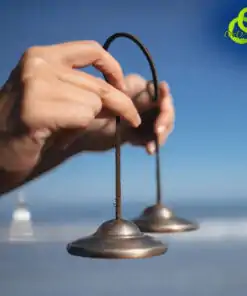
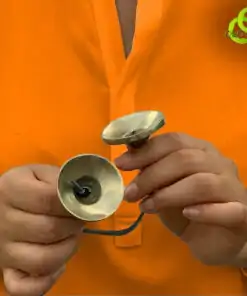
Tingsha are two small cymbals joined together. You strike one against the other to open or close a meditation.
They come in brass, copper or bronze, plain or engraved with the six syllable mantra, the double dragon or auspicious symbols.
The prayer wheel and the Om Mani Padme Hum mantra.
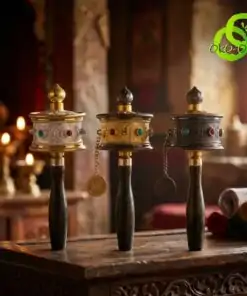
The prayer wheel is engraved with the mantra Om Mani Padme Hum, the mantra of Avalokiteshvara, the Buddha of compassion. It is turned clockwise.
By tradition, each turn counts as one recitation of the mantra. Ours comes in three sizes and three finishes, silver, gold or bronze.
Tibetan prayer flags.
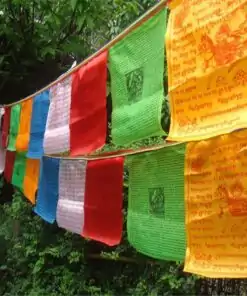
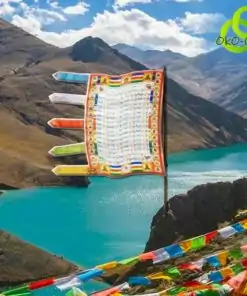
Prayer flags are hung outdoors, in the wind. By tradition, the wind carries the printed prayers and spreads blessings all around.
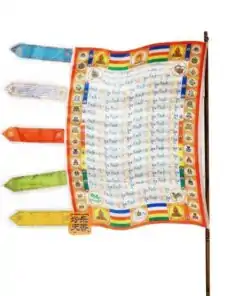
Their five colours always follow the same order. Blue for the sky, white for the air, red for fire, green for water, yellow for the earth.
The Lung ta flag, or wind horse.
At the centre of the Tibetan flag, the Lung ta carries on its back the jewel that grants wishes. Its name means “wind horse”.
Hung high, on a balcony or between two trees, it slowly fades in the sun. In Tibet, people say this is the sign that the prayers have gone.
Offering bowls on the Buddhist altar.
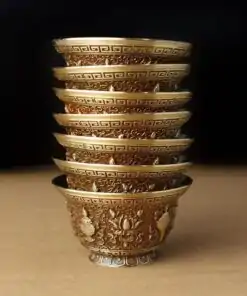
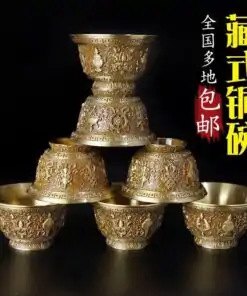
On a Tibetan Buddhist altar, seven offering bowls are traditionally set in a row in front of the statue. They are filled with clear water in the morning and emptied in the evening.
Each bowl has its meaning, drinking water, washing water, flowers, incense, light, perfume, food. Our carved bronze offering bowls are sold singly or as a set of seven, with or without a stand.
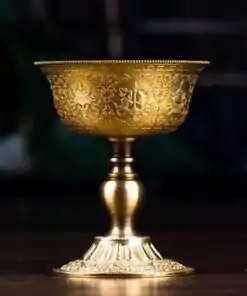
Butter lamps and the chalice.
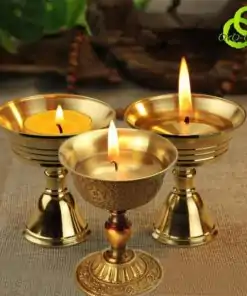
The butter lamp is placed on each side of the statue. Its flame stands for the light of knowledge that dispels ignorance.
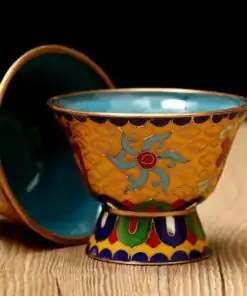
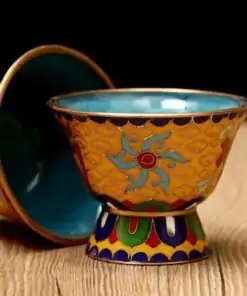
In Tibet, yak butter is burnt in it. At home, a tealight or oil works just as well. The cloisonné model can also hold offering water.
The Buddha statue, a support for practice.
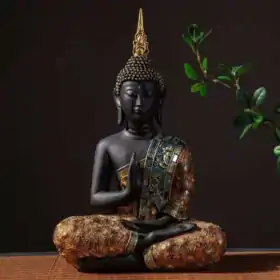
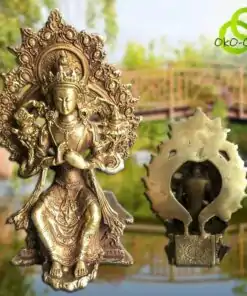
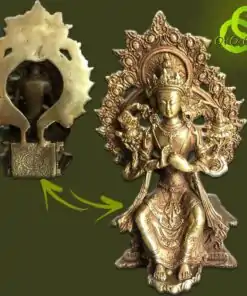
A Buddha statue gives the eyes a point of focus during meditation. It stands at the centre of the altar, a little higher than the offerings.
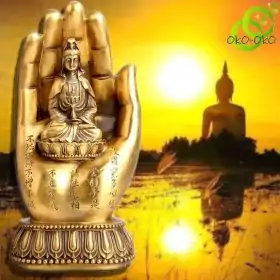
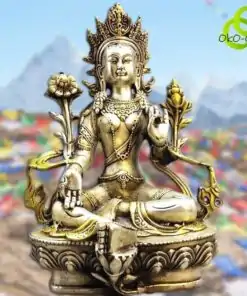
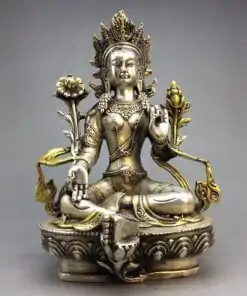
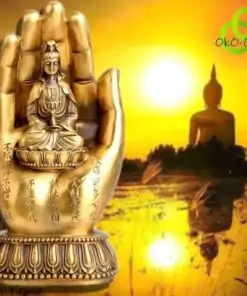
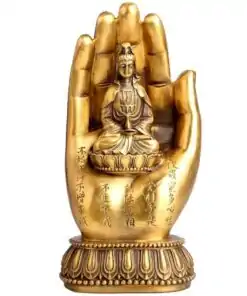
Our statues are hand-finished metal. Tara in bronze, Guanyin gilded with gold leaf, the hand of Buddha holding Guanyin on a lotus.
Tara, Guanyin and the Dharma wheel.
By tradition, Tara protects those who call on her from the dangers of life. Guanyin embodies compassion, as Avalokiteshvara, of whom she is the Chinese form.
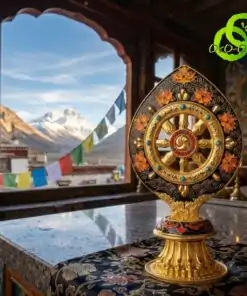
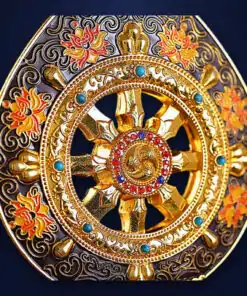
The Dharma wheel stands for the teaching of the Buddha, set in motion during his first sermon at Sarnath.
Buddhist meditation, where to begin.
To start Buddhist meditation, a quiet corner and a cushion are enough. Begin with ten minutes a day, always at the same time.
A singing bowl to open the session, a lamp lit in front of the statue, and the gesture becomes an appointment you keep.
Good to know.
Butter lamps and the chalice hold a naked flame. Set them on a stable surface, away from fabrics and flags, and never leave them burning unattended. Bronze and brass develop a patina over time. A soft dry cloth is all they need. Avoid abrasive products, especially on engravings.
Buddhism
Buddhism
Buddhism
Buddhism
Buddhism
Buddhism
Buddhism

Buddhism
Buddhism